
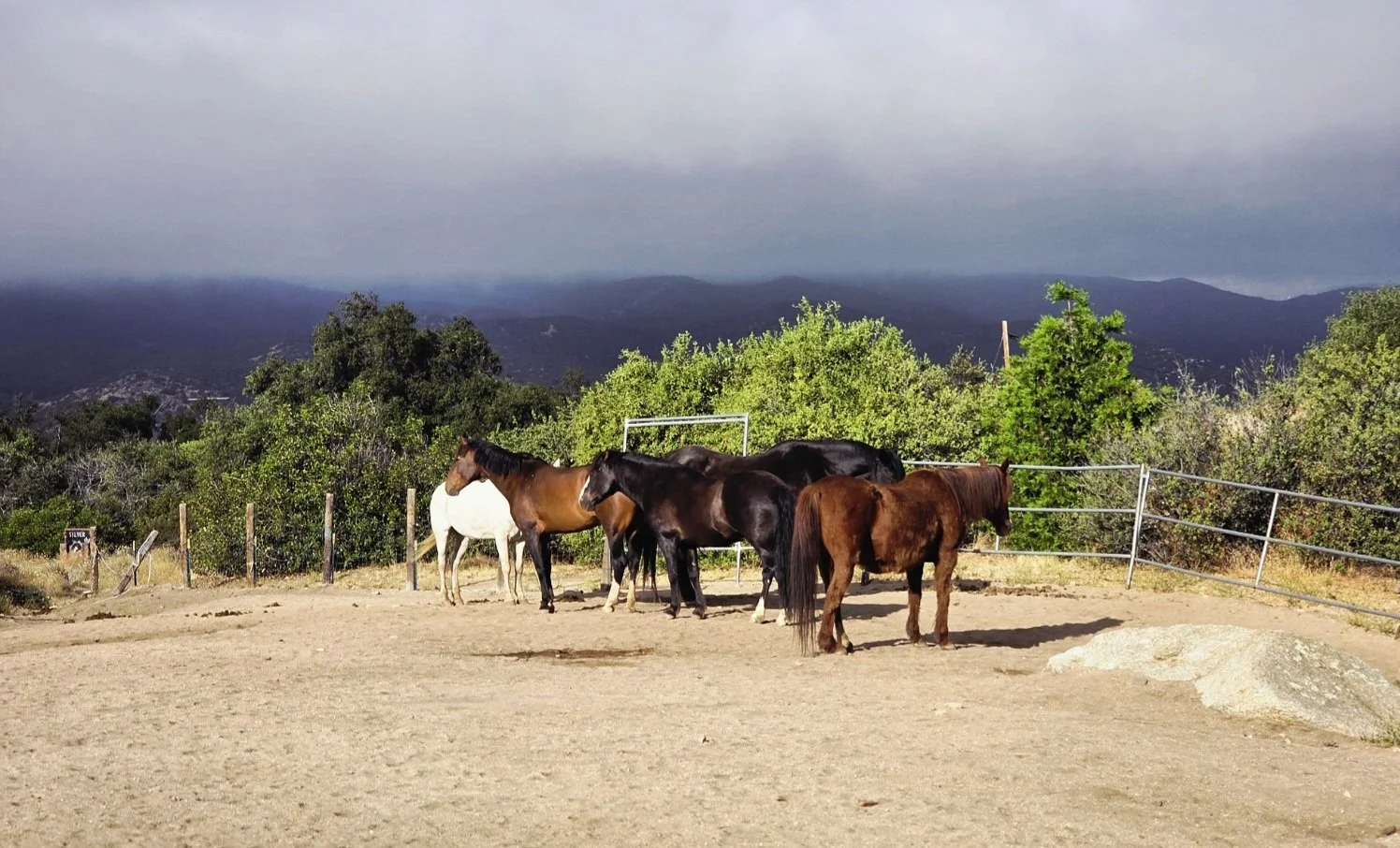
It’s a warm autumn afternoon, and I’m facilitating a constellation for a woman who feels deeply stuck in her life. We are inside the horse corral, surrounded by my herd of seven horses.
One white horse in particular is watching the woman intently and has positioned himself in the center.
Did anyone in your family die tragically? I ask.
Not that I can think of, she replies. But come to think of it, my grandfather did commit suicide.
Can you say more, please?
As the woman recalls the details of what happened to her grandfather, the horses shuffle around, closing in as if creating a boundary around her. The white horse holds his position, still locked onto her every movement.
He was in the Vietnam War and was captured and held prisoner for a year before he was rescued. He lost many of his friends. He returned home a different man. He drank a lot and was aggressive. Eventually, he shot himself in the head.
My grandmother found him.
It was a mess.
At this moment, the connection the white horse has been holding breaks, and the entire herd drifts away, gathering again at the far side of the corral.
Why did they leave like that? the woman asks.
Because they were no longer interested.
Why? Was it something I said? She laughs nervously.
Yeah, kind of, I say. They were showing you the gap in your ancestry, your missing grandfather, and you just reduced his whole existence to ‘a mess.’
Oh, she says.
All of these realities can be present at once: the devastating effects of war; the violence and addiction through which that devastation may later be expressed; the stigma of taking one’s own life; the traumatic aftermath left for those who remain; and beneath all of this, the life that came through him and continued into the generations that followed.