
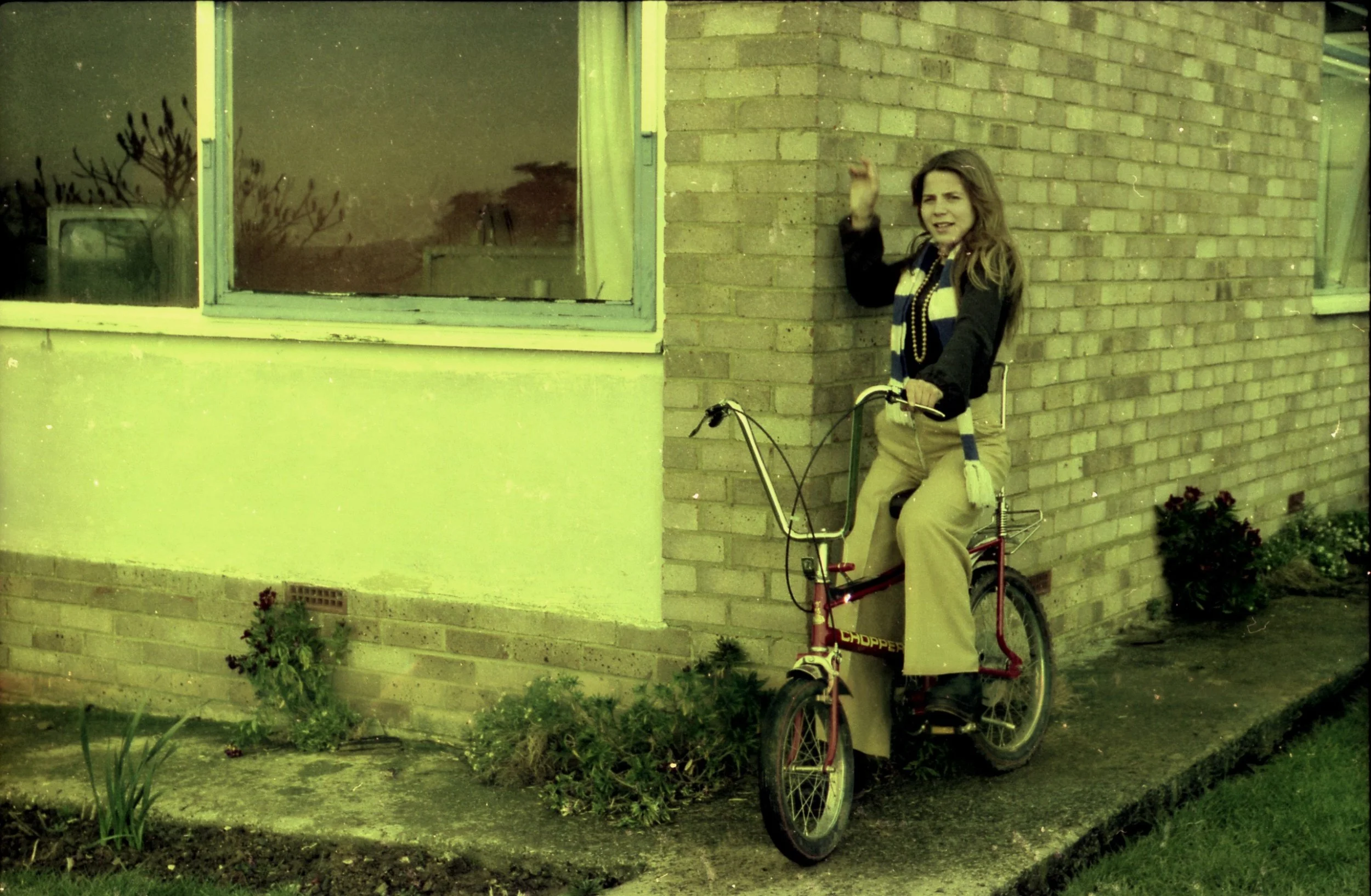
The past is not fixed because our relationship to what happened is not fixed. While what happened remains unchanged, what we orient towards can change.
We tend to think of time linearly. Yet another way of considering time is as layered or cyclical, with past, present, and future participating in one another.
Time zones offer a simple analogy. England is eight hours ahead of California, and Australia is already on the following day. Yet they are not living in our future. We are all in the same occurring moment. The different hours and dates describe different positions and orientations within that moment.
If time itself is relative rather than absolute, what does this mean for the past?
A person may have experienced genuine deprivation, absence, restriction, freedom, love, independence, resourcefulness, opportunity, loneliness, capacity, all within the same childhood. Everything was there.
The difference lies in which part of the story we organize around.
For example, I can look at my childhood and say: I was neglected. From the age of seven I was largely taking care of myself. I washed my own clothes, made my own food, and sometimes there was no food.
I can also look at the same childhood and recognize that I had extraordinary freedom. I grew up beside a recreational field. I could go outside whenever I wanted. I moved freely, learned how to navigate the world, became independent and street-smart very young, and was not subjected to many of the restrictions other children experienced.
Neither version needs to cancel the other. What matters is which story organizes my understanding of the past.
If I organize my childhood recollection around neglect, for example, I was a victim of what happened to me, this story becomes embedded in identity and carried forward in my signal, influencing the future trajectory.
Alternatively, if I recognize the freedom, autonomy, movement, and the unusual degree of independence I was given, this aspect of the same past becomes the organizing story. These qualities were not invented. They were there all along.
At the heart of Family Constellations is a simple fact: whatever judgement we hold about our parents, life came through them. We would not be here otherwise.
This is not about inventing a preferred version of the past. I do not need to imagine a childhood in which I received more care than I did. I can acknowledge what is: the neglect remains part of my history, alongside the freedom and independence already present within it.
This is where Family Constellations and the Cosmic Algorithm overlap.
Family Constellations alters our relationship to the past; the Cosmic Algorithm shows how the organizing story is carried forward as signal, influencing the future trajectory.
This reveals the malleability of the past and our capacity to include what was already there.